


The situation in the Western Balkans countries – Albania, Bosnia and Herzegovina, Kosovo, Macedonia, Montenegro and Serbia is becoming more and more challenging for the European Union.

Germany has made itself a reputation for being both an active supporter and a severe critic of the Western Balkans’ EU integration.

The Western Balkans have been perceived since recently as a potential new field of cooperation between Germany and Poland.

Looking at the pictures from the 27 October summit in Istanbul, where President Recep Tayyip Erdoǧan hosted President Emmanuel Macron, Chancellor Angela Merkel and President Vladimir Putin

Turkey's president Recep Tayyip Erdogan’s state visit to Berlin at the end of September 2018 sparked speculations about a possible thaw in Turkish-German relations which had experienced serious tensions in the last two years.

The relations between the European Union and Turkey which, besides Russia, is the EU’s most important neighbor, should become at least an issue of dialogue between Poland and Germany. The latter will always possess the biggest potential in the EU to engage with Turkey; meanwhile, Warsaw’s relationship with Ankara has deepened substantially in recent years.
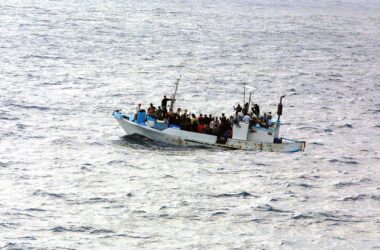
The high influx of asylum seekers in 2015 plunged the European Union into a crisis. The brunt of refugee reception rested on only a few shoulders.

Most of EU citizens see the migration crisis of 2015 as a one-off event. However, mass migration is a part of human history – and Poland with its massive diasporas in the U.S., Canada or France is a good example.

Migration processes in globalized reality has grown to the scale of unprecedented challenge for contemporary Europe.

Not being a lawyer makes it really challenging to evaluate legal intricacies of the recent Polish reforms of the judiciary. Nevertheless, the EU debate concerning Polish reforms has a clear political dimension.


