';
side-area-logo

delimiter image

Newsroom

National Assessments of Carbon Management Potential in CEE Regions in Transition

A new WiseEuropa report – serving as a synthesis of the insights and findings developed throughout the Green Horizon project – highlights that carbon management solutions, particularly carbon capture and storage (CCS), could play a pivotal role in this process, especially in regions undergoing structural transition.

Share
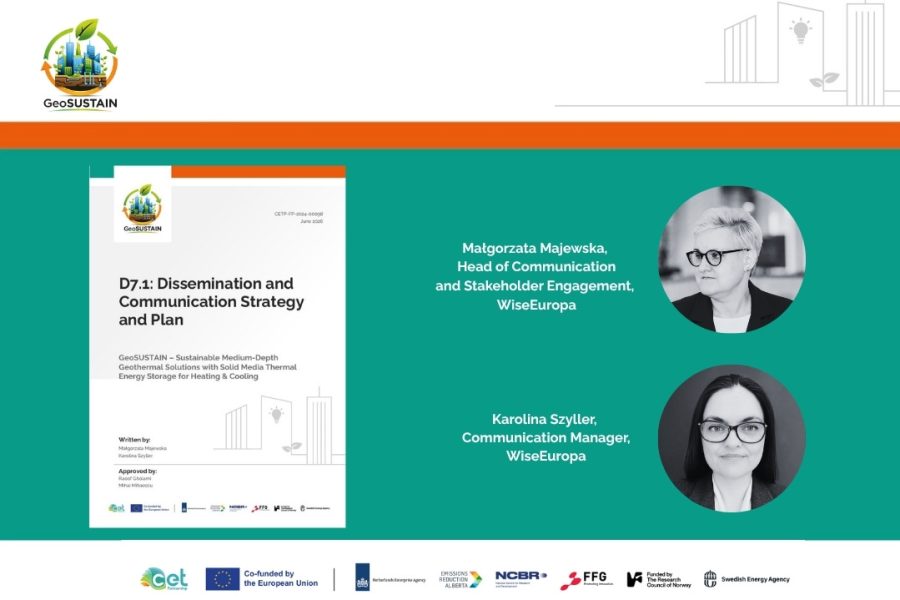
GeoSUSTAIN – a New International Geothermal Project for Industry

The international GeoSUSTAIN project has been launched - its focus is on developing an efficient, zero-emission, geothermal-based solution for industrial heating and cooling – fully aligned with the goal of achieving climate-neutral H/C systems by 2050.

Share
National Study on Public Perception on Carbon Management in Poland

This report presents the latest snapshot of public awareness and social acceptance of carbon management (CM) technologies in Poland, combining quantitative survey data with qualitative insights from focus groups and industry interviews.

Share
delimiter image

Events

24-25.11.2025

WiseEuropa on the Program Council of the GREENPACT Congress in Poznań

We invite you to participate in the GREENPACT Congress on November 24-25, 2025, in Poznań.

The GREENPACT Congress is a space where visions of the future meet real action. Business leaders, experts, and decision-makers from across Europe will debate how to combine green transformation with building a competitive economy and reducing social inequalities. Previously known as the ESG European Summit, this year the event will operate under the new name GREENPACT.

The congress is organized by the MTP Group and the Polish Chamber of Commerce (KIG).
25-26.03.2025

WiseEuropa is a partner of The Climate Congress of Poland in Warsaw.

The Climate Congress of Poland and Central Northern European Climate Summit will be held on March 25 and 26, 2025.

It is Poland’s largest business congress on investments affecting the achievement of climate goals. The event brings together all stakeholder groups in the investment market. Almost 150 experts from Poland and abroad will participate in twenty-six panel discussions.

18-20.10.2024

WiseEurope is a Content Partner of the 11th edition of the Freedom Games.

The Freedom Games is an interdisciplinary cultural and intellectual forum aimed at creating a creative meeting space for people of culture, business and public life from various sectors.

During this year’s edition, under the theme “City: Europe: Future,” we will talk about the most important challenges facing Western societies in the 21st century.

delimiter image

Our publications

Layer
Layer

Steel Industry
in Public Policies

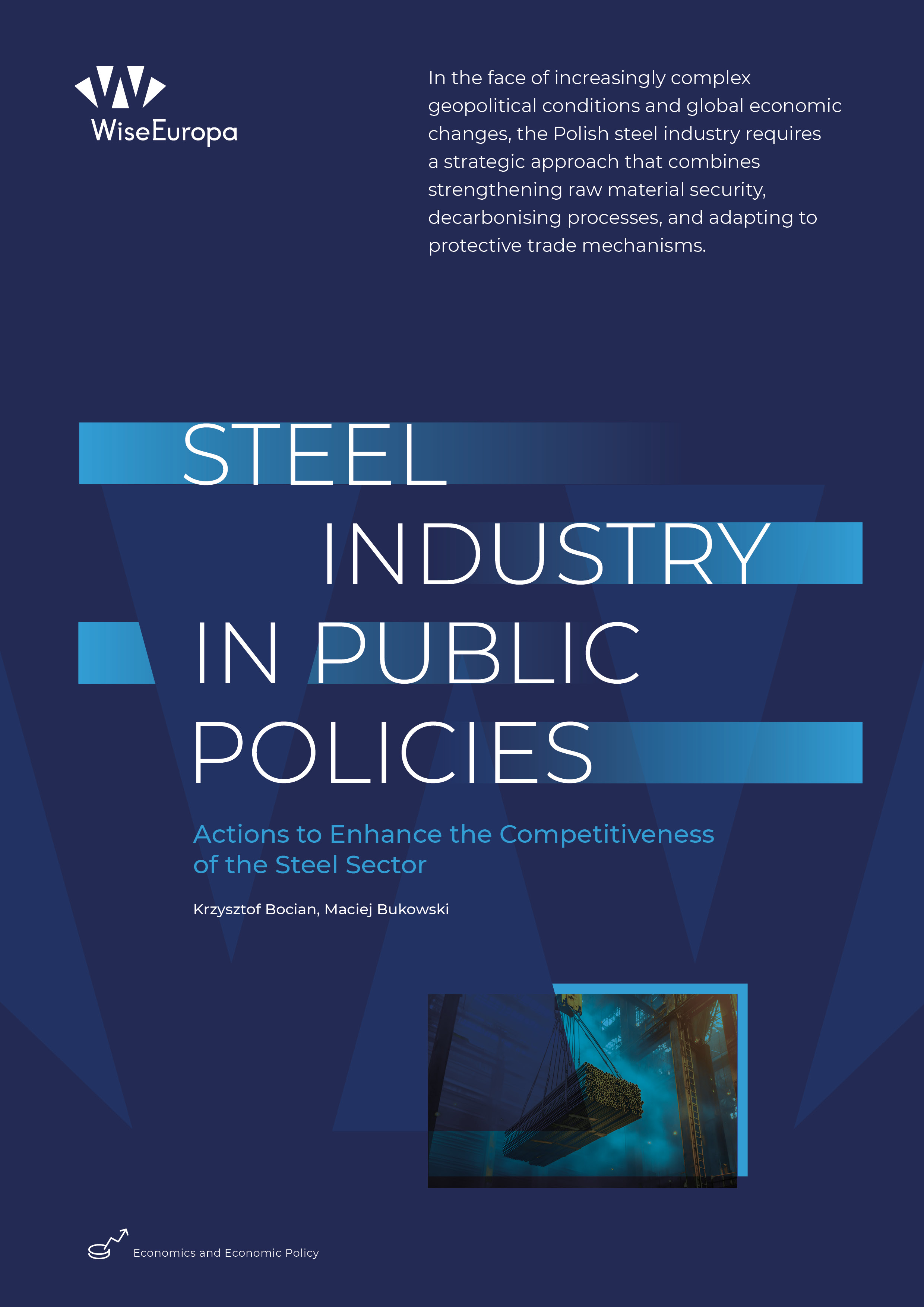
One of the pillars of Poland’s strategic security is the domestic steel industry’s ability to provide a stable supply of steel to key sectors of the economy, including defense, critical infrastructure, and manufacturing. In their latest report, Krzysztof Bocian and Maciej Bukowski emphasize the urgent need for a national steel industry strategy and present recommendations for supporting this sector effectively.

Poland, with a steel production of 7.1 million tons that only covers about half of its domestic demand of 12.9 million tons, ranks among the world’s countries with the highest import penetration, at 89%, with imports of 11.5 million tons. This high level of dependence on imports weakens the country’s strategic autonomy and increases the risk of supply chain disruptions.

To meet the growing demand driven by the energy transition, infrastructure expansion, and increased defense spending, Poland must strengthen its production capacity and improve the competitiveness of its steel industry.

The regionalization of steel production is becoming increasingly apparent worldwide. Countries are using tariffs, subsidies, tax breaks, and public procurement preferences to protect and prepare their steel industries for future challenges. The steel sector in Poland requires an immediate, coherent, and effective strategy.

Based on analyses and dialogue with the public administration, industry, and civil society, we have identified six key areas requiring action: (1) raw materials and recycling, (2) energy, (3) technologies, (4) investments and financing, (5) legal regulations, and (6) trade and the economic environment.