

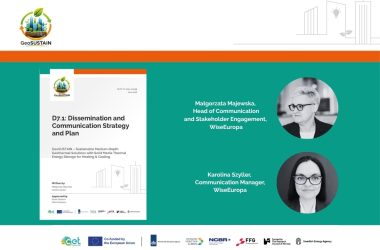
Dissemination and Communication Strategy and Plan, authored by Małgorzata Majewska and Karolina Szyller from WiseEuropa, has just been released within the GeoSUSTAIN project (Sustainable Medium-Depth Geothermal Solutions with Solid Media Thermal Energy Storage for H/C). WiseEuropa is the leader of Work Package 7, which covers Reporting, Knowledge Community and Exploitation.
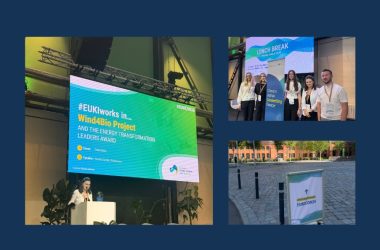
In mid-May, the EUKICON26 conference took place in Berlin, bringing together representatives of organizations from 20 European countries implementing projects under the European Climate Initiative (EUKI). We were invited by the organizers to present one of our projects, Wind4Bio – Increasing the Social Acceptance of Wind Energy, for which we received the Energy Transformation Leader 2025 award.
A new WiseEuropa report – serving as a synthesis of the insights and findings developed throughout the Green Horizon project – highlights that carbon management solutions, particularly carbon capture and storage (CCS), could play a pivotal role in this process, especially in regions undergoing structural transition.
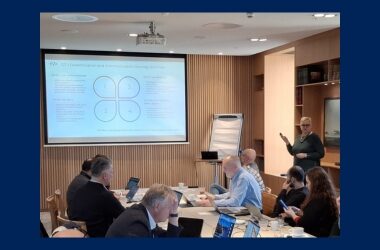
The international GeoSUSTAIN project has been launched - its focus is on developing an efficient, zero-emission, geothermal-based solution for industrial heating and cooling – fully aligned with the goal of achieving climate-neutral H/C systems by 2050.

This report presents the latest snapshot of public awareness and social acceptance of carbon management (CM) technologies in Poland, combining quantitative survey data with qualitative insights from focus groups and industry interviews.
In December last year, Maciej Bukowski, President of the Board of WiseEuropa, joined Expert Council on Energy Security and Climate, which aims to develop joint recommendations and initiate dialogue in areas crucial to improving Poland's energy security and climate protection.

In their latest report, Krzysztof Bocian and Maciej Bukowski emphasize the urgent need for a national steel industry strategy and present recommendations for supporting this sector effectively.

Poland has not yet set a binding climate neutrality target. The other goals proposed in the NECP update are likewise misaligned with European Union climate policy objectives, a point the European Commission highlighted in its assessment of the submitted projection. The proposed ETS‑sector reduction would amount to 14.4%, below the Effort Sharing Regulation (ESR) requirement of 17.7% versus 2005 levels.

The RenovAID project, which has been running since November 2023, is coming to an end. At the event concluding the project, the partners presented the results of the project and discussed the transfer of good practices in the field of building renovation between countries and twin cities.

Twenty-four civil society organisations (CSOs) – including NGOs, environmental groups, labour unions, and industrial associations – from Poland, Romania, Bulgaria, and Latvia have joined a new coalition, which held its kick-off meeting on 26 September 2025. s.

Developed under the RenovAID project, the two new handbooks—Handbook on One-Stop Shops in Albania and Handbook on One-Stop Shops in Kosovo—provide step-by-step guidance on how to create effective OSS (One-Stop Shop) systems in the capitals of Tirana and Pristina.

Without the capacity for systems thinking, the state remains merely an administrator of crises rather than an architect of the future.


