

The first part covers overarching measures, encompassing many sectors and multiple financial tools. The second parts provides sectoral insights. We focus on policies and projects that relate to energy transition and climate action.

The first part covers overarching measures, encompassing many sectors and multiple financial tools. The second parts provides sectoral insights. We focus on policies and projects that relate to energy transition and climate action.

The Polish fuel and energy sector needs a courageous and coherent action plan. “The current, unique circumstances allow us to design and implement a new deal for the Polish energy sector – one that

The report is the first study in Poland enabling identification of financing sources, determining the involvement of individual groups of investors and presenting the scale of expenditure on renewable energy sources.

The project 'The Emergence of New States in Eastern Europe in 1918 – Lessons for Entire Europe’ (TENSE), implemented by WiseEuropa, was completed In March 2020. It was a project that focused on the process of building nations after 1918 in Eastern Europe.

Actions are needed to rapidly implement climate-friendly solutions for the non-ETS buildings and transport sectors. This is particularly true for Central and Eastern European (CEE) EU member states, where both

Decarbonising the building sector is essential for achieving the EU’s emissions neutrality goal. While some countries in Central and Eastern Europe registered a significant decrease in emissions despite an

The transport sector is one of the most challenging sectors to decarbonise in the European Union. This is even more the case for the Central and Eastern European countries, where increasing economic

As part of the preparation of the report, all forms of public subsidies used by the Polish energy sector were examined. In total, several mechanisms consume over PLN 7 billion a year from the state budget and the pockets of energy consumers.

Sustainable finance taxonomy and national climate strategies can often work to complement each other by bringing national contexts to provisions outlined in a classification system.
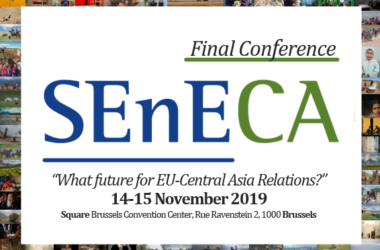
The final conference of the Horizon 2020 project “SEnECA - Strengthening and Energizing EU-Central Asia relations” was held in Brussels on 14-15 November 2019. The event “What Future for EU-Central Asia Relations?” was organised by the Trans European Policy Studies Association (TEPSA) and the Centre international de formation européene (CIFE).
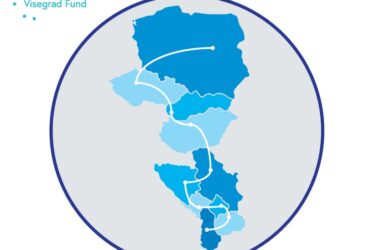
Reconciliation and good neighbourly relations are among the key priorities of the Stabilisation and Association Process of the Western Balkans and represent a necessary condition for the advancement of the countries of the region towards the EU.


