

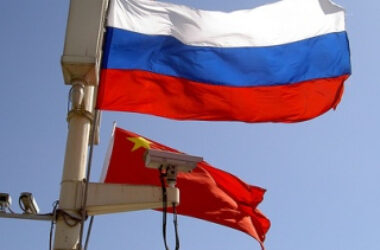
Countries of Central Asia Region are pursuing foreign policy based on principles of multi-vector policy. This countres remain tied from good relations with Russian Federation in different scale
We have seen it several times before: a draft Multiannual Financial Framework which tries to find the middle ground between the widely diverging preferences of the main players.
Over the past decades, EU budget negotiations have been an issue of relatively little public attention in Germany. One might go so far and say that beyond the circles of the government,

Meeting of partners and stakeholders of COP21: Results and Implications for Pathways and Policies for Low Emissions European Societies (RIPPLES) took place in Warsaw on 25-26 April. WiseEuropa, Climate Strategies and The Institute for Sustainable Development and International Relations were the hosts of the event.

The 1st Networking Conference and Review Workshop of the project Strengthening and Energizing EU-Central Asia Relations (SEnECA) took place in Riga, Latvia, 17 – 19 April 2018. WiseEuropa is one of the project partners.
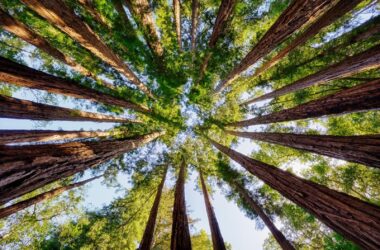
EIT Climate-KIC is to launch a forestry innovation programme combining bio-economy, conservation and sequestration approaches to help deliver European mitigation targets.

"The Triangle of Weimar", designed as a communication and political platform, was meant to help shaping a new European order in a post-1989 era. It has its ups and downs.
Large-scale divestment, a call for an in-depth analysis of the business model, as well as a greater transparency in reporting – actions addressing climate risks

The uniqueness of the Polish energy mix stems from delayed occurrence of processes which have already taken place in Western Europe – according to a recently published report by WiseEuropa

We present the publication “German-Polish European Dialogue”, which summarizes the texts posted on the German-Polish European Blog, run by WiseEuropa since June 2017.


